


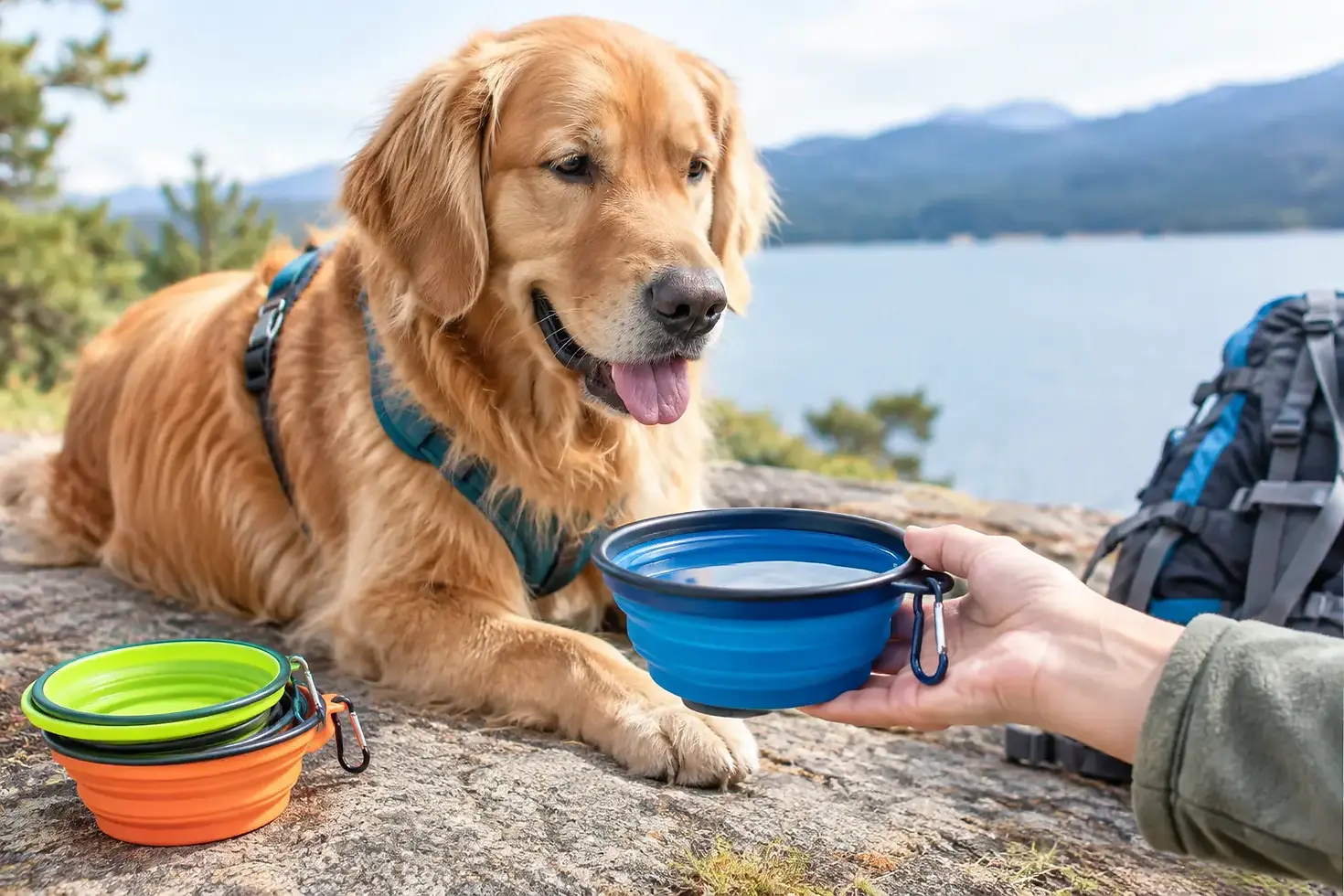
How to Choose a Collapsible Water Bowl for Dogs

A thirsty dog does not care whether you planned a quick walk around the block or a full afternoon at the park. Once the temperature rises, the pavement heats up, or the car ride runs long, having water ready becomes a simple part of responsible pet care. A collapsible water bowl gives you an easy way to offer a drink without carrying a bulky dish in your bag, vehicle, or camping gear.
The best option is not necessarily the largest or the cheapest. It should be easy to pack, stable enough for your dog to drink from, simple to rinse out, and sized for the outings you actually take. Here is how to choose one that earns a permanent spot by the leash, in the glove box, or in your daypack.
Why a Collapsible Water Bowl Is Worth Carrying
A regular pet bowl works well at home, but it takes up more space than most people want to give up on a walk or trip. Collapsible bowls flatten down when empty, so they can slide into a backpack pocket, clip onto a leash bag, or stay in the car without adding clutter.
That convenience helps solve a common problem: pet owners often remember a water bottle but forget a practical way for their dog to drink from it. Pouring water into your hand is messy and wasteful. Letting a dog drink from a public fountain or a shared bowl can also be less appealing when you are trying to keep things clean.
For daily neighborhood walks, the bowl may only be needed occasionally. For hiking, beach days, camping, road trips, and outdoor events, it becomes much more useful. The small amount of space it takes up is usually worth the peace of mind.
Choose the Right Collapsible Water Bowl Size
Capacity is one of the first things to consider. A bowl that is too small may require repeated refills, while an oversized bowl can be awkward to carry and may hold more water than your dog needs at one stop.
Small bowls are often a good fit for puppies, small breeds, and short walks. Medium bowls are a practical all-around choice for many households because they work for routine outings without taking up much room. Larger bowls make more sense for big dogs, multi-dog homes, hot weather, or longer stretches away from your vehicle or water source.
Depth matters as much as total capacity. A shallow bowl may be easier for small dogs to reach, but it can splash when a larger dog drinks quickly. A deeper bowl can hold more water, though it needs a stable base to avoid tipping. If your dog has a short muzzle, mobility limitations, or tends to push bowls around, a wider, lower-profile design may be more comfortable.
Look for Materials That Are Easy to Clean
Most collapsible pet bowls are made from silicone, fabric, or a combination of lightweight materials. For frequent everyday use, food-grade silicone is often the most practical choice. It is flexible, compact, generally easy to rinse, and does not absorb water the way fabric can.
A silicone bowl should feel thick enough to hold its shape once opened. Very thin material may save a little weight, but it can fold inward while your dog drinks or become harder to clean around the rim. Look for a smooth interior with minimal seams where dirt, hair, or food residue can collect.
Fabric bowls can be useful when weight is the top priority, particularly for hikers and campers. The trade-off is that they may take longer to dry and can require more thorough cleaning after use. They are best for owners who are comfortable rinsing and drying gear after each outing rather than tossing it back into a bag while damp.
Whatever material you choose, wash the bowl regularly. A quick rinse is fine when you are out, but a proper cleaning at home helps prevent buildup from saliva, dust, treats, or leftover food.
Features That Make a Bowl Easier to Use
A collapsible bowl is a simple product, but a few practical details can make a real difference. A carabiner or clip is especially useful because it keeps the bowl accessible. You can attach it to a backpack, belt loop, leash bag, or the outside of a camping tote instead of searching through a packed bag when your dog needs water.
A firm reinforced rim is another helpful feature. It gives the bowl structure when open and makes it easier to hold while you pour water. Some designs also have multiple expansion levels, allowing you to use a shallow setting for a quick drink or a deeper setting for more water.
Non-slip bottoms can be useful on smooth patio surfaces, hotel floors, and the back of an RV or vehicle. They are less critical on grass or dirt, but still helpful for dogs that drink enthusiastically. If you plan to use the bowl for kibble as well as water, choose one with enough structure to stay open while your dog eats.
Avoid treating every extra feature as necessary. A built-in bottle attachment or a very large capacity can be helpful for certain travel routines, but it may add bulk or limit flexibility. The best design is the one you will actually bring with you.
Match the Bowl to Your Routine
The right bowl depends on where your dog goes with you. For short urban walks, a compact bowl paired with a small water bottle is usually enough. Keep it clipped to your leash bag so it is ready when temperatures change or a walk runs longer than expected.
For road trips, it helps to keep a dedicated bowl in the car along with bottled water, towels, and waste bags. Rest stops can be busy and warm, and your own bowl gives your dog a familiar, cleaner place to drink. A slightly larger option is often useful here because you do not have to carry it far.
For hiking and camping, durability and packability matter most. Choose a bowl that collapses flat, has a secure clip, and can be rinsed easily from a bottle or water source. Remember that natural water is not always safe for dogs. Bring sufficient treated water for both you and your pet, especially on hot trails or in areas with limited access.
At parks, sports fields, and outdoor gatherings, a collapsible bowl can also reduce the need to share communal pet bowls. Shared bowls are convenient, but they can be dirty or empty by the time you arrive. Carrying your own takes very little effort and gives you more control.
How Much Water Should You Bring?
There is no single amount that fits every dog and every outing. Water needs vary based on your dog's size, activity level, coat type, age, health, weather, and how long you will be away from home. A calm small dog on a cool 20-minute walk needs far less than a large, active dog hiking in direct summer sun.
A practical approach is to bring more than you think you will need when conditions are warm or activity is intense. Offer small drinks regularly rather than waiting until your dog is panting heavily or searching for puddles. If your dog is reluctant to drink, take a break in the shade and try again after a few minutes.
Watch for signs that your dog may be overheating, including excessive panting, thick drool, weakness, vomiting, confusion, or trouble walking. Water is helpful, but it is not a substitute for getting your dog into a cooler environment and seeking veterinary guidance when symptoms are serious.
Keep It Clean Between Outings
A bowl that stays clipped to a bag can collect dust, grass, or lint, especially if it is stored open or wet. After use, empty any remaining water and give it a quick rinse. At home, wash it with warm soapy water, paying attention to folds and the area around the rim. Let it dry fully before collapsing and storing it.
If you use the bowl for food during travel, clean it more thoroughly before switching back to water. Greasy treat residue can affect the taste of the water and attract dirt inside your bag. Keeping one bowl mainly for water and another for food can be a smart choice for frequent campers or travelers.
A Small Item That Prevents a Bigger Problem
The value of a collapsible water bowl is not in complicated design. It is in being ready when your dog needs a drink and there is no clean, convenient bowl nearby. Choose a size that fits your dog, a material you can clean easily, and a design you will not mind carrying.
Keep it with the gear you already reach for before leaving home. That simple habit can make walks, errands, travel days, and outdoor adventures more comfortable for your dog and easier for you.


Comments